The patients who had a consult and haven't decided
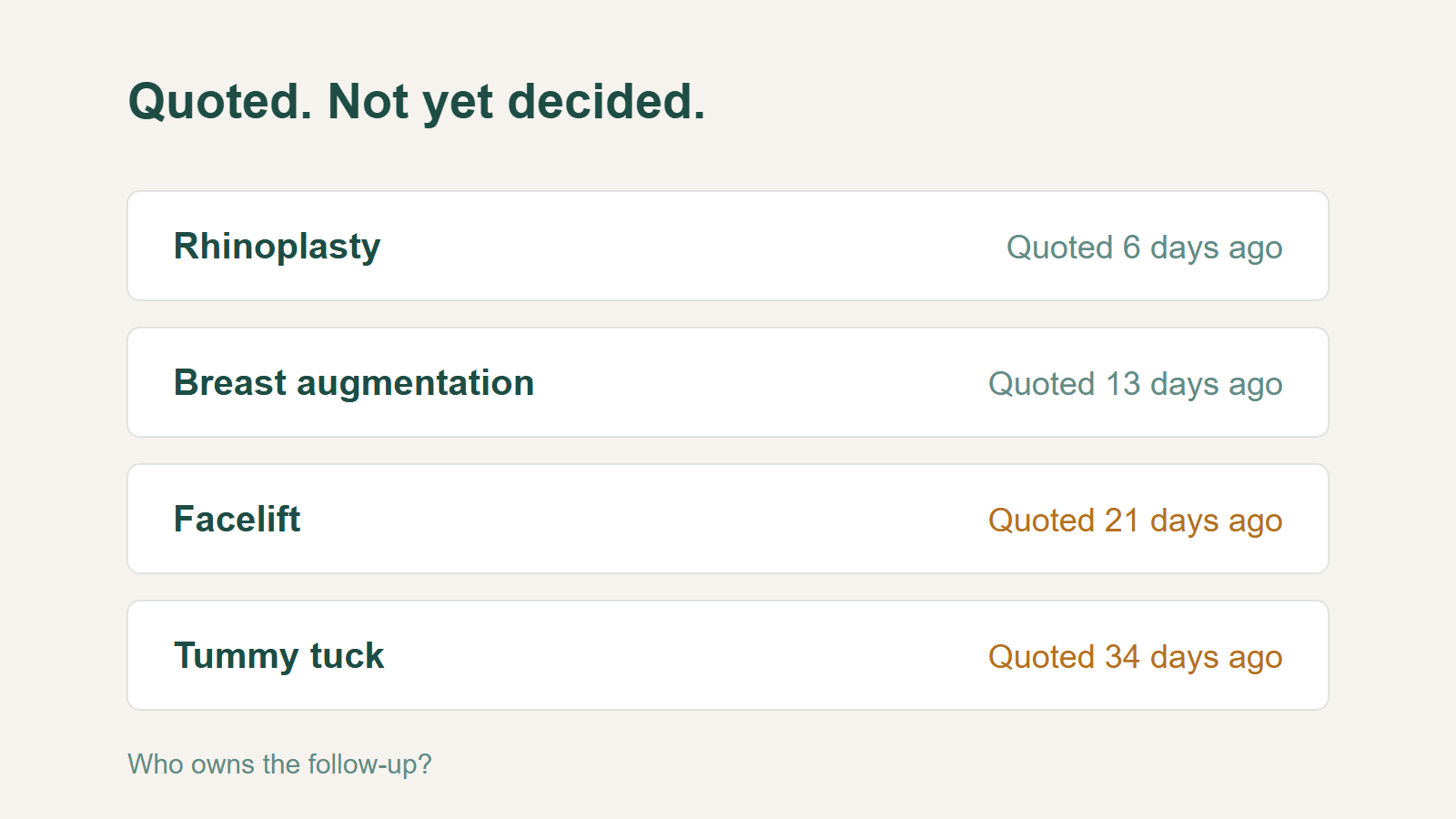
Every practice has a list it doesn't see: patients who came in, met the surgeon, got a quote and went home to think about it.
These are the warmest leads you will ever have. They found you, they showed up, and they liked you enough to ask what it costs. Most of them haven't said no. They just haven't said yes yet.
Why nobody owns them
The trouble is that these patients fall between jobs. The front desk is focused on new inquiries. The surgeon has moved on to the next consult. The coordinator means to follow up, but a quote from three weeks ago is easy to lose behind today's phone calls. Without a list in front of anyone, the follow-up depends on memory.
And memory is selective. The patients who were enthusiastic in the room get called. The quiet ones, who may simply have needed time or had a question they didn't ask, get forgotten.
What a useful follow-up list shows
A follow-up list only works if it answers three questions at a glance:
- Who has a quote and hasn't decided.
- What each quote is worth.
- How long each person has been waiting since the consult.
Sorted by value and time, it tells your coordinator exactly where to spend the first hour of the week. It also gives the practice owner an honest view of what's sitting undecided, which is often more than anyone guessed.
A simple follow-up rhythm
Patients decide on their own timeline, but a little structure keeps anyone from slipping through. A rhythm many coordinators find workable:
- A few days after the consult: a short, personal check-in. Did she have any questions after she got home?
- About two weeks after: a call that addresses the usual sticking points, such as recovery time, financing or scheduling around work.
- About a month after: an invitation to come back in, talk to the surgeon again or see before and after photos of similar cases.
- After that: a light touch now and then, without pressure, until she books or tells you she's decided against it.
Adjust it to your practice. What matters is that every quoted patient has a next step and someone who owns it.
What to say, and what not to
The best follow-up calls sound like help, not sales.
- Ask what's on her mind instead of asking if she's ready to book.
- Answer the real question, which is often about recovery, time off work or how to pay.
- Mention financing options if your practice offers them, plainly and without pushing.
- Never pressure with expiring discounts she didn't ask about. It cheapens the relationship she started with your surgeon.
Silence is the one approach that never works. A patient who hears nothing after a consult can easily read it as indifference.
Let the list come to you
PatientCadence sends this list every month: every patient who has a quote and hasn't decided, with the value of each and how long they have been waiting. The same report shows deposits and balances due on scheduled surgeries, so you know what collections to expect.
The patients on that list already chose to walk through your door. The follow-up decides whether they walk back in.