What happens to an inquiry that comes in at 9 pm?
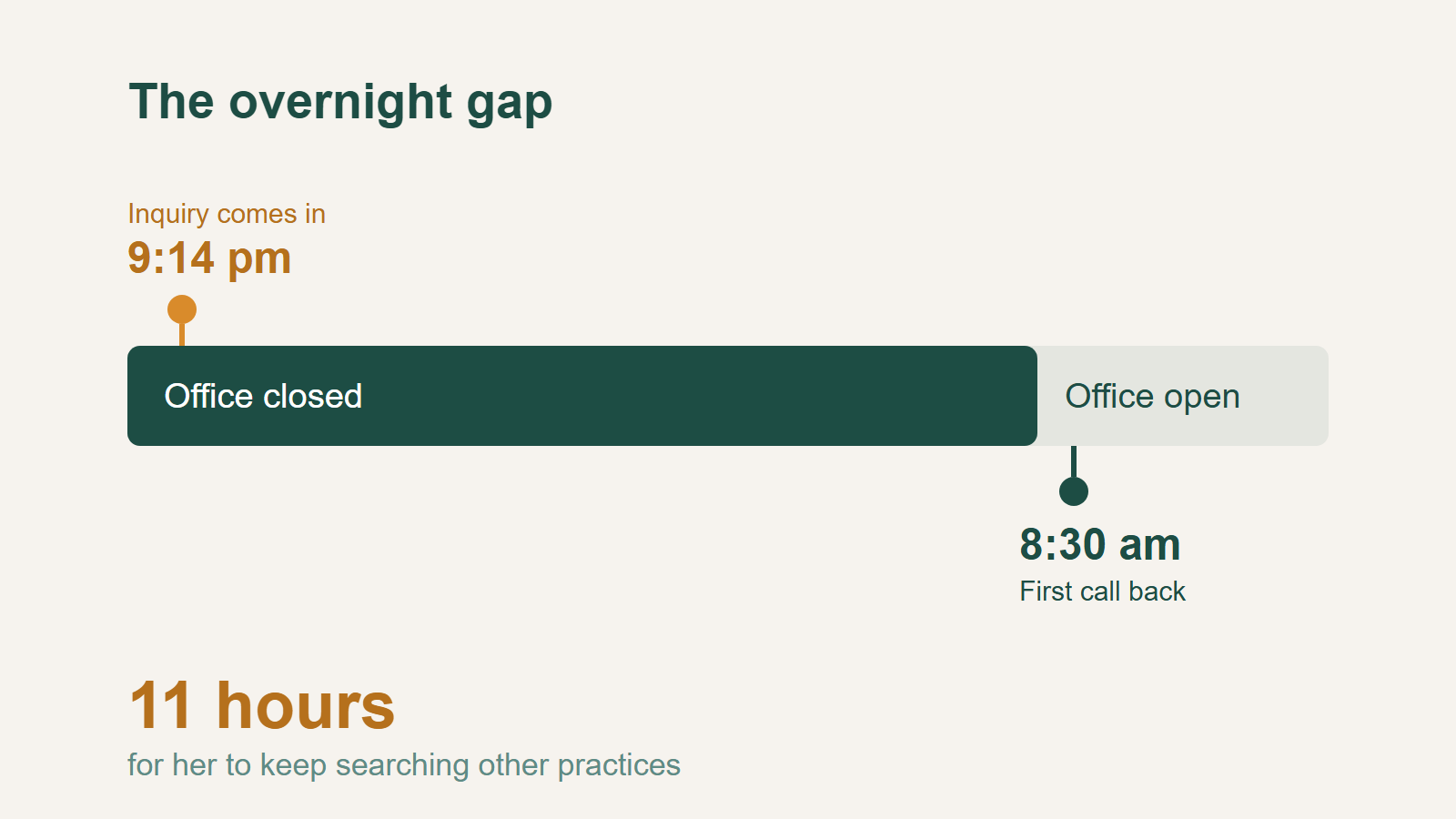
Some patients only get time to research a procedure after dinner, which is exactly when your office is closed.
Picture a patient who finally works up the nerve to call about a rhinoplasty at 9:14 pm. She gets voicemail, or she fills out the form. Either way, the earliest anyone can call her back is the next morning, and that's if the message is the first one the front desk picks up.
That is eleven hours or more in which she can keep searching, and nothing stops her from calling other practices too. The one that answers, or calls back first, gets the first real conversation.
The three usual answers, and what each costs
There are three common ways practices handle evening inquiries, and each has a cost.
- An answering service takes a message, but usually can't tell a surgery inquiry from a billing question, and rarely asks what the caller is interested in.
- A coordinator who answers her cell at night is responsive for a while, then burns out, and the practice loses its best person.
- Doing nothing means accepting that evening inquiries start every morning behind, and that the patients who called last night compete with this morning's phone calls for attention.
What a good after-hours setup captures
Whatever you use after hours, judge it by what's on your team's list at 8 am. A good overnight capture gives your coordinator:
- The caller's name, spelled correctly.
- A cell number and an email that have been read back and confirmed.
- What she's interested in, in her own words.
- How she found you.
- Anything she said about timing, like an event she's planning around or a preferred time to call.
With that, the morning call is a continuation of a conversation, not a cold start. Without it, your coordinator is calling a phone number with no name and no context.
A receptionist that never closes
PatientCadence includes Ava, an AI receptionist who answers in your practice's name, day or night. She asks what the caller is interested in, takes her name, cell and email, and reads them back so nothing is misspelled.
What Ava doesn't do matters just as much. She doesn't quote prices and she doesn't book your calendar. Those conversations belong to your coordinator, who knows your surgeon, your schedule and how to talk about cost. Ava makes sure the patient is captured, qualified and at the top of your team's list when the office opens.
What to do with overnight inquiries at 8 am
Capturing the call is only half of it. The other half is the morning.
- Call overnight inquiries first, before the day's new calls start stacking up.
- Mention what she asked about, so she knows she was heard.
- If you can't reach her, send a short personal text with your name and the best time to call back.
- Note the attempt, so nobody else calls her twice or assumes someone already did.
The patients who reach out at night are often the ones who have been thinking about a procedure for a long time and finally decided to act. The first call of the morning should go to them.
You can hear Ava yourself: call (725) 338-7391, or talk to her in your browser on our AI receptionist page.