Why your lead counts don't match your front desk's list
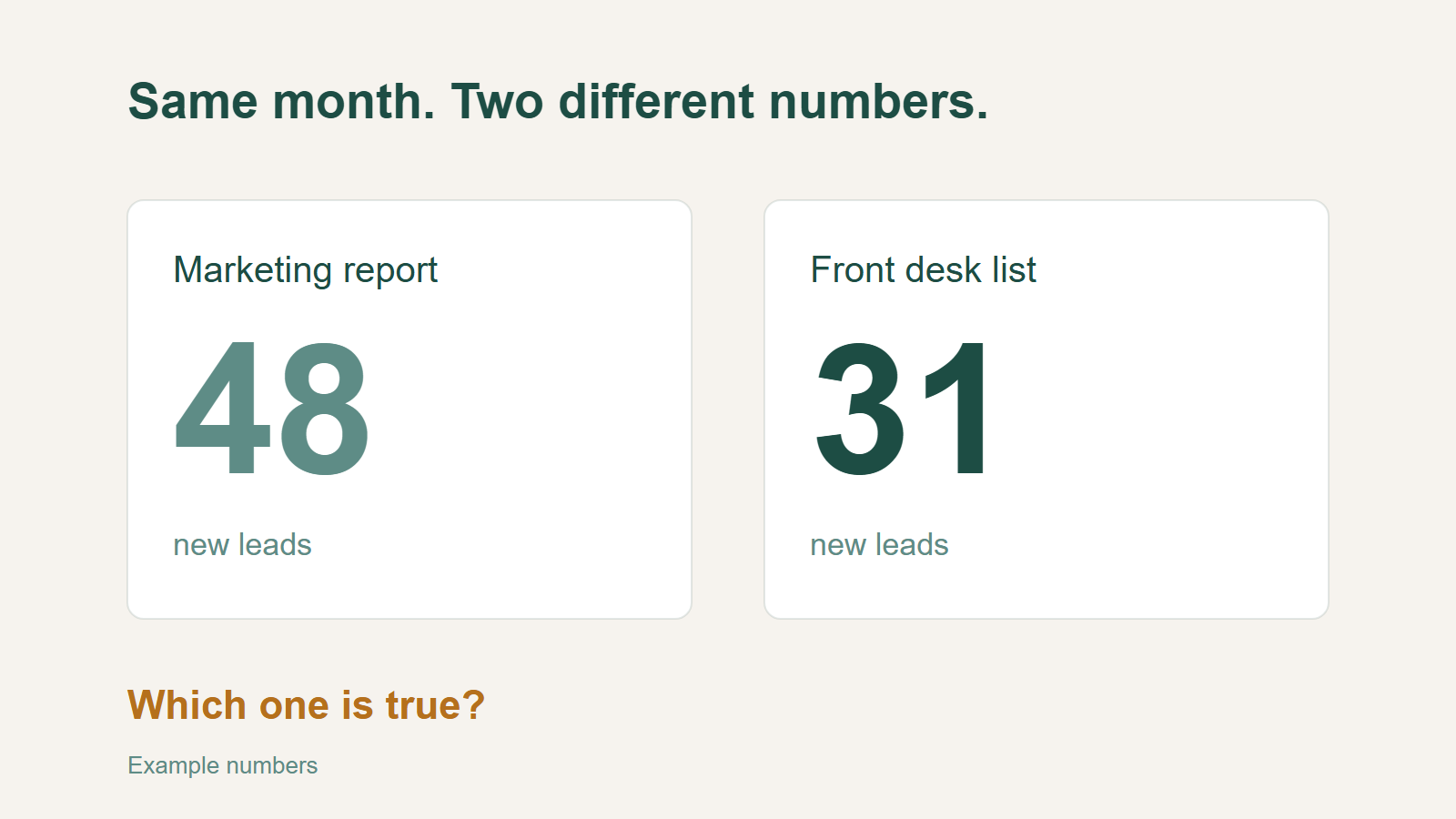
Ask a practice how many new leads it got last month and you will often get two answers. The marketing report says one number. The front desk's list says another. Both are presented with confidence.
The gap usually isn't anyone lying. The two sides are counting different things.
Where the numbers drift apart
A marketing report and a front desk list can both be accurate and still disagree. The usual reasons:
- Duplicates. The same person fills out a form, then calls, then messages on Instagram. Marketing may count three leads. The front desk counts one person.
- Spam and wrong numbers. Automated form submissions and misdials often land in the marketing count.
- Existing patients. Someone asking about a follow-up appointment shows up as a new form submission.
- Short calls. A call tracking system may count every call that connected, including hang-ups and calls that lasted a few seconds.
- Double credit. The same patient may be credited to two campaigns or two channels.
- The unreached. The front desk often doesn't write down the people it never managed to speak to, so they quietly drop out of its list.
None of these are mistakes on their own. Together, they can make the same month look very different depending on who you ask.
What you actually need to know
Neither number answers the questions that matter to a practice owner:
- How many real people asked about a procedure?
- Where did each of them come from?
- What happened to each one: reached, consulted, booked or lost?
Those answers come from following each person, not from adding up clicks or phone logs.
How to reconcile last month in one afternoon
If your numbers don't match, you can usually find out why in a few hours:
- Export the marketing report's list of leads for the month, with names, phone numbers and emails where available.
- Put it next to the front desk's list.
- Match people by phone number or email and merge the duplicates.
- Remove spam, wrong numbers and existing patients.
- For everyone left, note whether the front desk reached them, and whether they booked a consult.
What you end up with is the real number of new patients who asked about a procedure, and a clear view of the ones nobody reached.
One list everyone works from
The lasting fix is one list that everyone works from. Every inquiry goes in once, with its source, whether it came from the website form, a phone call, Instagram, Google or a referral. Duplicates get merged. Each person moves through the same stages, from new inquiry to consult to surgery, so the count of leads and the count of consults come from the same place.
Once the numbers come from one board, the arguments stop and the useful questions start. Which sources produce consults, not just clicks? Which ones went quiet this month? Is the agency's best channel also the front desk's best channel?
Questions to ask your marketing agency
When you have your own count, a conversation with your agency gets more productive. Good questions:
- How do you count a lead, and do you remove duplicates and existing patients?
- Can you show me leads by person, not just by total?
- Which of these leads became consults, according to our records?
That's how PatientCadence reports: one board your team already works from, and a weekly report that counts new leads by source for the last four weeks side by side, with consults and surgeries counted from the same patients. When the marketing report and the front desk disagree, you have a third number that settles it.